Oil in the Soil: When A Picture Is a Thousand Words
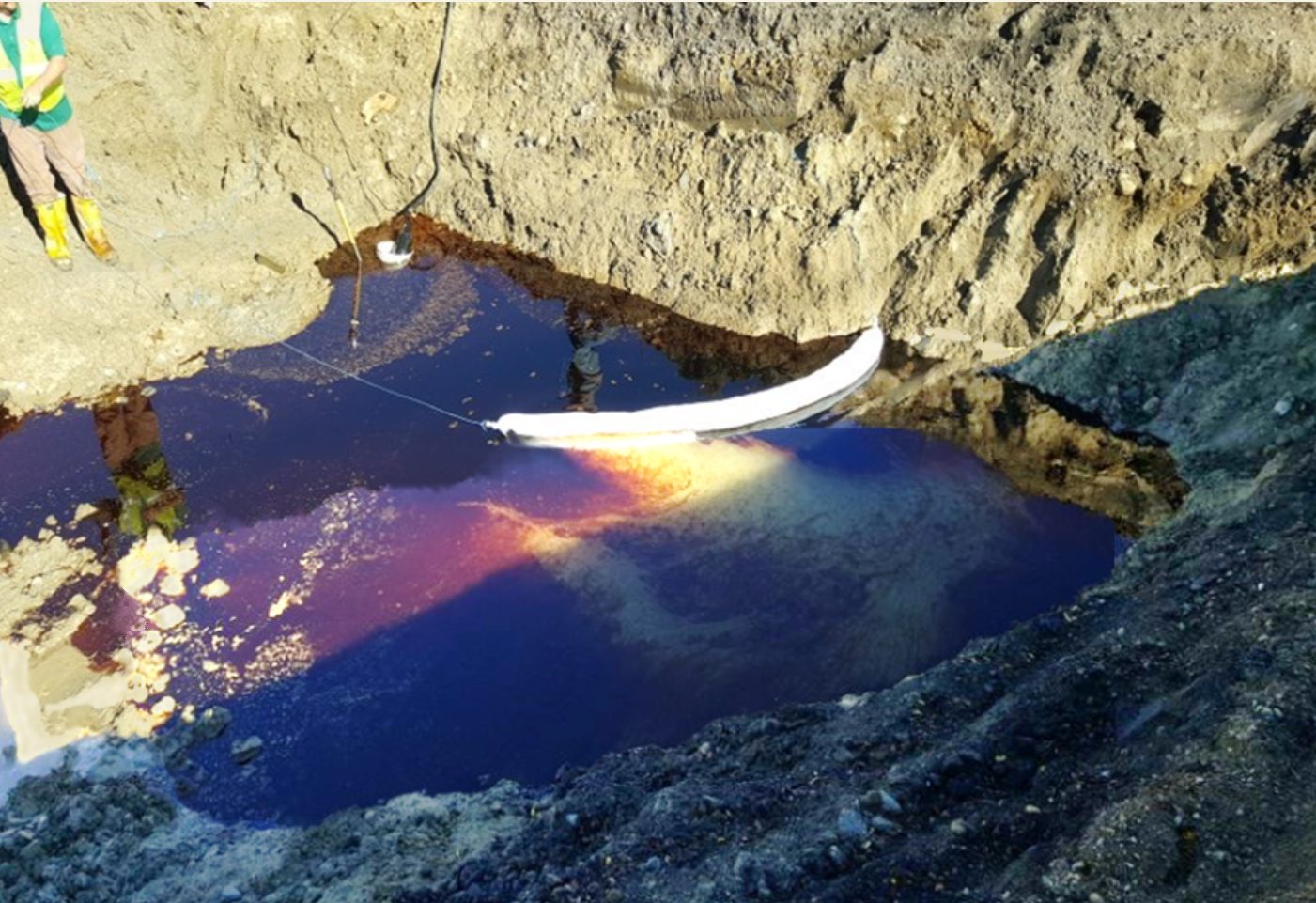
Some stories can be told in a picture. Standing over an open excavation with LNAPL pooling at your feet evokes a bad feeling. No matter how indifferent the responsible party may seem, the discovery of significant free-phase product changes the narrative. Suddenly, neighbors, regulators, insurance carriers, and attorneys are part of the conversation.
While disputes over parts per billion can devolve into abstract debates among toxicologists, physicians, and expert witnesses. A pit filled with black oil is a punch in the gut. It’s visual, irrefutable – you can see it right there! It is the story.
Some argue that if LNAPL isn’t mobile, it should be left in place—and in some cases, that may be appropriate. But in most cases, actively remediating LNAPL is in everyone’s best interest. It restores our environment, reduces liability, and resolves uncertainty, clearing the path to property reuse.
BOS200+ is formulated for dealing with LNAPL. In this newsletter, we present a unique heavy lube oil site where BOS 200+ demonstrated its ability to address LNAPL. (See the case study.