
In Situ DCE Remediation for Groundwater and Soil

featured-image-768x576.jpg
GettyImages-2218396897-min

Targeted DCE Remediation Solutions for Soil and Groundwater

Eliminate lingering chlorinated solvent contamination at the source — without surface disruption. 

RPI®’s in situ dichloroethylene (DCE) remediation solutions are engineered to target and treat DCE in soil and groundwater, delivering effective, regulatory-compliant cleanup. 

Contact Us Site Evaluation

Why Is DCE so Tough to Treat?

DCE often forms as a daughter product during the breakdown of other chlorinated solvents like trichloroethene (TCE) and tetrachloroethene (PCE). Even if the primary contaminant is treated, DCE can persist, increase in concentration, or proceed to vinyl chloride. 

In some aquifers, it can be persistent and resistant to natural degradation processes. Some traditional remediation methods are conducive to DCE formation and contribute to stalling further degradation. RPI’s BOS 100 and CAT 100 are advanced in situ DCE remediation technologies that don’t leave you stuck halfway. They drive degradation to harmless final products such as ethene and CO2.

GettyImages-941112674-min

In Situ Remediation: Your Best Defense Against DCE

Here’s why in situ is the preferred approach for DCE plume remediation and DCE contaminated groundwater treatment:

  • No disruptive excavation: In situ methods treat the contamination directly in the ground, avoiding the need for excavation and reducing labor, equipment, and disposal costs.
  • Adaptability: In situ technologies can be tailored to specific site conditions and contaminant profiles. This flexibility enables targeted treatment strategies that address complex contamination scenarios, including mixed contaminant plumes.
  • Long-term effectiveness: RPI®’s in situ products offer both chemical reduction and biodegradation to meet your site’s specific needs. These technologies are proven to be persistent, reducing the need for repeated interventions.
  • Regulatory compliance: In situ remediation accelerates regulatory compliance and speeds up site closure, helping you meet environmental standards efficiently.

Contact Us

Our Proven Technologies for DCE Remediation

1
Step 1

Remedial Design Characterization (RDC)

methods-3
2
Step 2

Tailored Remediation Strategy

methods-2
3
Step 3

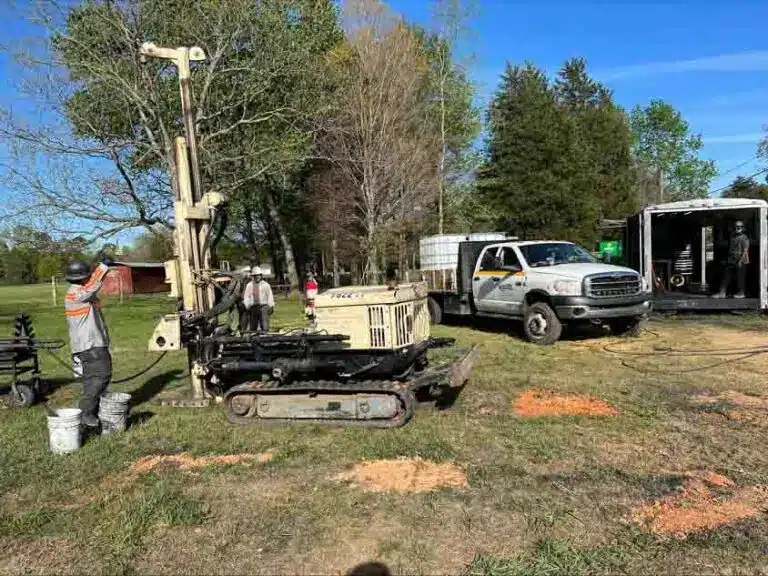
In Situ Injection Installation

GettyImages-2218396897-min
4
Step 4

Performance Monitoring

methods-1
Success Steps

How Our DCE Remediation Services Set You up for Success

Our comprehensive approach keeps every phase of your in situ DCE remediation project optimized for success and compliance:

  1. Remedial design characterization (RDC): We begin with high-resolution site data collection to guide custom design and optimize treatment zones. 
  2. Tailored remediation strategy: Every plan is tailored to your site’s unique geochemistry and DCE distribution.
  3. In situ injection installation: Our experienced team delivers precise, efficient installation for maximum contact with the contaminant mass.
  4. Performance monitoring: Our post-treatment sampling confirms degradation progress and supports regulatory reporting.

Contact Us

Why Choose RPI® for DCE Remediation?

Here’s why large corporations trust RPI®:

  • Complete remediation support: From products, remedial design, and installation, we clean up DCE contamination effectively.
  • Reduced risk of daughter products: Our solutions prevent the formation of potentially harmful byproducts by combining adsorption, chemical reduction, and biodegradation as appropriate for your site.
  • Carbon-driven contaminant removal: Our technology uses activated carbon to adsorb contamination on contact and create the ideal environment for rapid degradation.
  • Flexible application across sites: RPI®’s remediation solutions are suitable for various site conditions and can be tailored to specific contamination scenarios.
Resources

Remediation Resource Highlight

Request an Estimate

Contact Us