
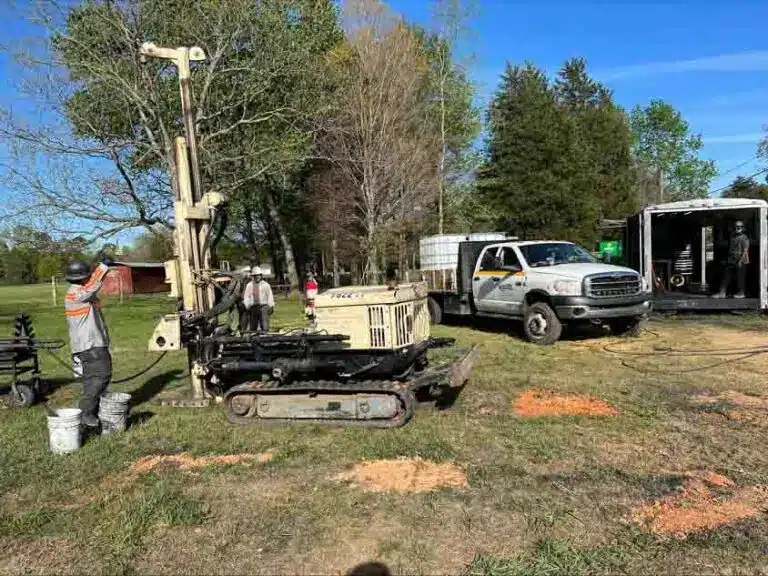
Sites that include 1,4-dioxane contamination are difficult to treat. At RPI®, the site drives the remedy. Using quantitative high‑resolution Site Characterization (qHRSC) and Remedial Design Characterization (RDC), we map dioxane mass flux and pathways, then place Trap & Treat® technology where it matters most. Our designs support 1,4-dioxane in situ remediation by pairing an iron-impregnated activated carbon platform with bioaugmentation that breaks contaminants down right where they are.
If left untreated, 1,4‑dioxane can persist in groundwater long after site operations have ended and often requires complex remedies. Trap & Treat® offers two in‑place treatment modes selected by site conditions: abiotic iron‑impregnated activated carbon with BOS 100 and biotic degradation achieved with CAT 100.
Within dioxane treatment methods, Trap & Treat® uses adsorption plus sustained biostimulation and bioaugmentation to address dissolved‑phase plumes and source‑adjacent impacts where the carbon platform can control exposure and support ongoing degradation. This aligns with the Trap & Treat® approach in which activated carbon immediately cuts off exposure pathways while microbes drive ongoing degradation.
RPI®’s data‑driven approach aligns with your regulatory framework and dioxane environmental regulations by pairing RDC-informed designs with ongoing analytical checks from our Support Lab before, during, and after projects, a combination that has supported regulatory closure outcomes across contaminants.
BOS 100-based platforms have demonstrated long‑term performance and have supported managed closures at complex solvent sites, underscoring the durability and flexibility of RPI’s activated carbon-based remedies. And, of course, many sites have received regulatory closure.
Dioxane cleanup methods must be expertly designed with a site’s specific characteristics in mind. Having decades of experience providing solutions for projects globally, RPI® stands out with installation and verification solutions that deliver lasting results.
We are known for:
Trap & Treat® technologies integrate with your program, providing adsorption to control exposure while biostimulation and bioaugmentation sustains degradation, supporting clear, measurable outcomes. RPI® offers dioxane exposure control plus treatment in one step, performance across conditions, and life cycle support from RDC through installation and post‑treatment verification.
Ready to explore dioxane in situ remediation? Contact the experts at RPI® for data-driven design and to discuss whether CAT 100 fits your dioxane cleanup site.