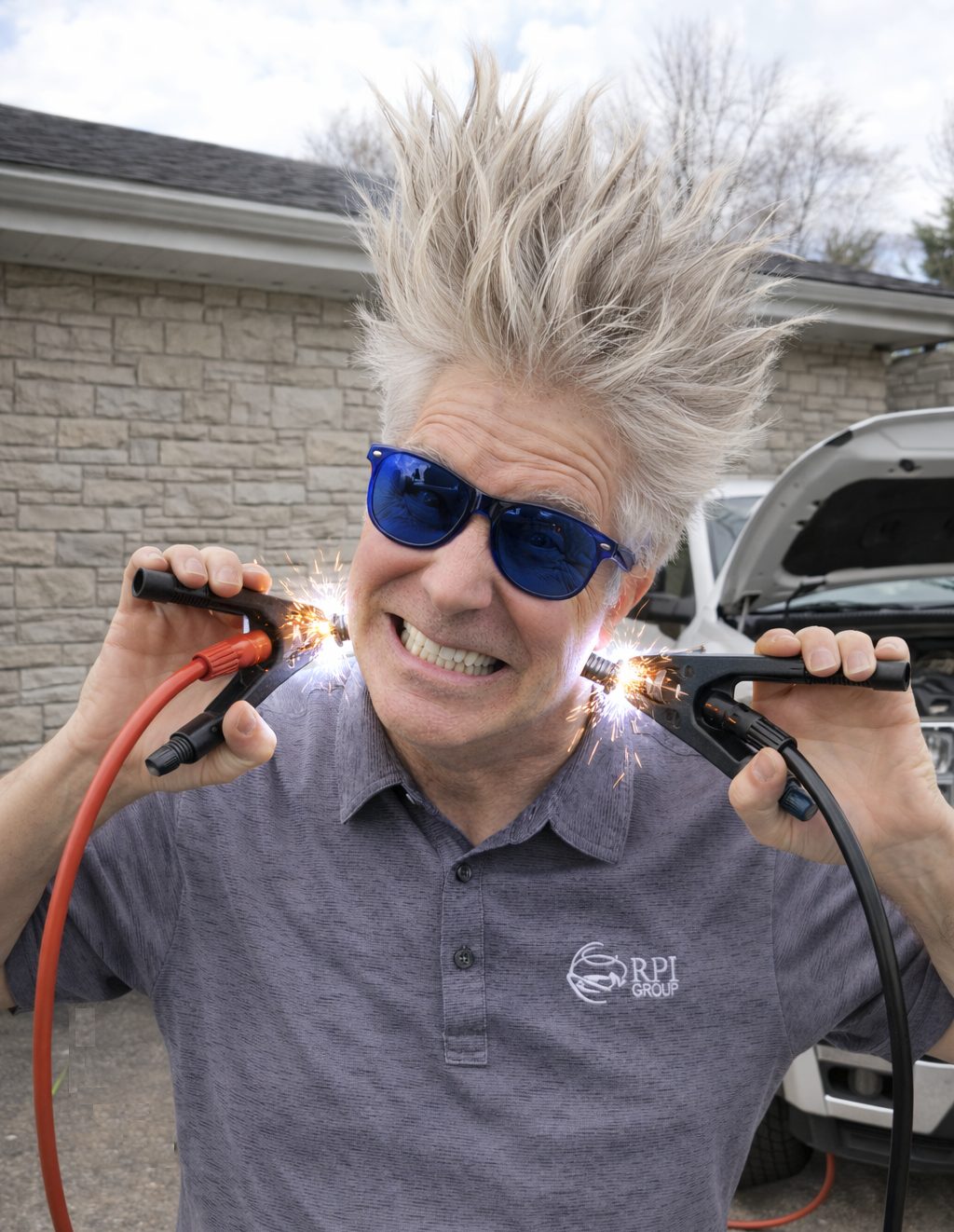
Life is simply the movement of electrons—from higher energy states to lower ones. Romantic, it’s not, but there is thematic beauty in what powers a crawling worm and a flying bird.
In remediation, the key question you need to ask yourself is “How do I move electrons in this situation?” Moving electrons efficiently—and in the right direction—governs the fate of contaminants, including our favorites: chlorinated solvents and hydrocarbons.
Organisms such as Dehalococcoides mccartyi transfer electrons to chlorinated compounds, sequentially removing chlorine until ethene is formed.7,4 Likewise, hydrocarbon degradation depends on electrons finding a terminal sink—directly to oxygen, nitrate, sulfate, or CO₂, or indirectly through a microbial partner that completes the circuit. At heart, it is the same process—the contaminant simply serves as either the electron acceptor or the electron donor.
Generally, electron exchange is thought to rely on diffusible carriers such as hydrogen and acetate, which is correct, but not the whole story. Research shows that microbes can exchange electrons directly—through conductive proteins, surface cytochromes, or carbon-based materials—in a process known as direct interspecies electron transfer (DIET).5,8 First recognized in methanogenic systems, DIET is now understood to support a broader range of processes, including electron exchange between bacteria (not just archaea) and supporting processes such as metal reduction, and in some systems, sulfate reduction, and hydrocarbon degradation.2,3,6 In systems operating near thermodynamic limits, how electrons move can determine whether reactions proceed or stall. These conductive pathways reduce energy losses, strengthen syntrophic relationships, and accelerate degradation.
This is where engineered carbon systems change the equation. Beyond adsorption, activated carbon acts as a conductive matrix, facilitating electron flow among microbes, minerals, and internally coupled electron donors and acceptors.1,3 BOS 200® and BOS 200+® are activated carbon-based and promote electron exchange between bacteria. When iron is integrated into that carbon structure, as it is in BOS 100®, it provides a persistent source of electrons via oxidation of the iron. When combined with fermentation, as it is in CAT 100, the carbon network shuttles electrons and recharges the iron, preventing its oxidation. This recharge only works if the iron resides within the pore structure of the activated carbon and will not protect the iron from oxidizing in physical mixtures of iron powder and activated carbon.
In either case, the result is not just containment, but continuity of electron flow. And when electron flow is continuous, degradation progresses.
Remediation isn’t just geology, chemistry, or biology—it’s the movement of electrons.
References
Kappler, A., et al. (2014). Environmental Science & Technology, 48(19), 11211–11219.
Kato, S., Hashimoto, K., & Watanabe, K. (2012). PNAS, 109, 10042–10046.
Liu, F., et al. (2015). Energy & Environmental Science, 8, 292–296.
Löffler, F. E., et al. (2013). Annual Review of Microbiology, 67, 377–397.
Lovley, D. R. (2017). Annual Review of Microbiology, 71, 643–664.
Lovley, D. R. (2011). Nature Reviews Microbiology, 9, 497–508.
Maymó-Gatell, X., et al. (1997). Science, 276, 1568–1571.
Rotaru, A.-E., et al. (2014). Applied and Environmental Microbiology, 80, 4599–4605.
Zhuang, L., et al. (2024). Science of the Total Environment, 907, 167815. (Review)
Webinar: Life Is Electron Flow — So Is Remediation: The Role of DIET