

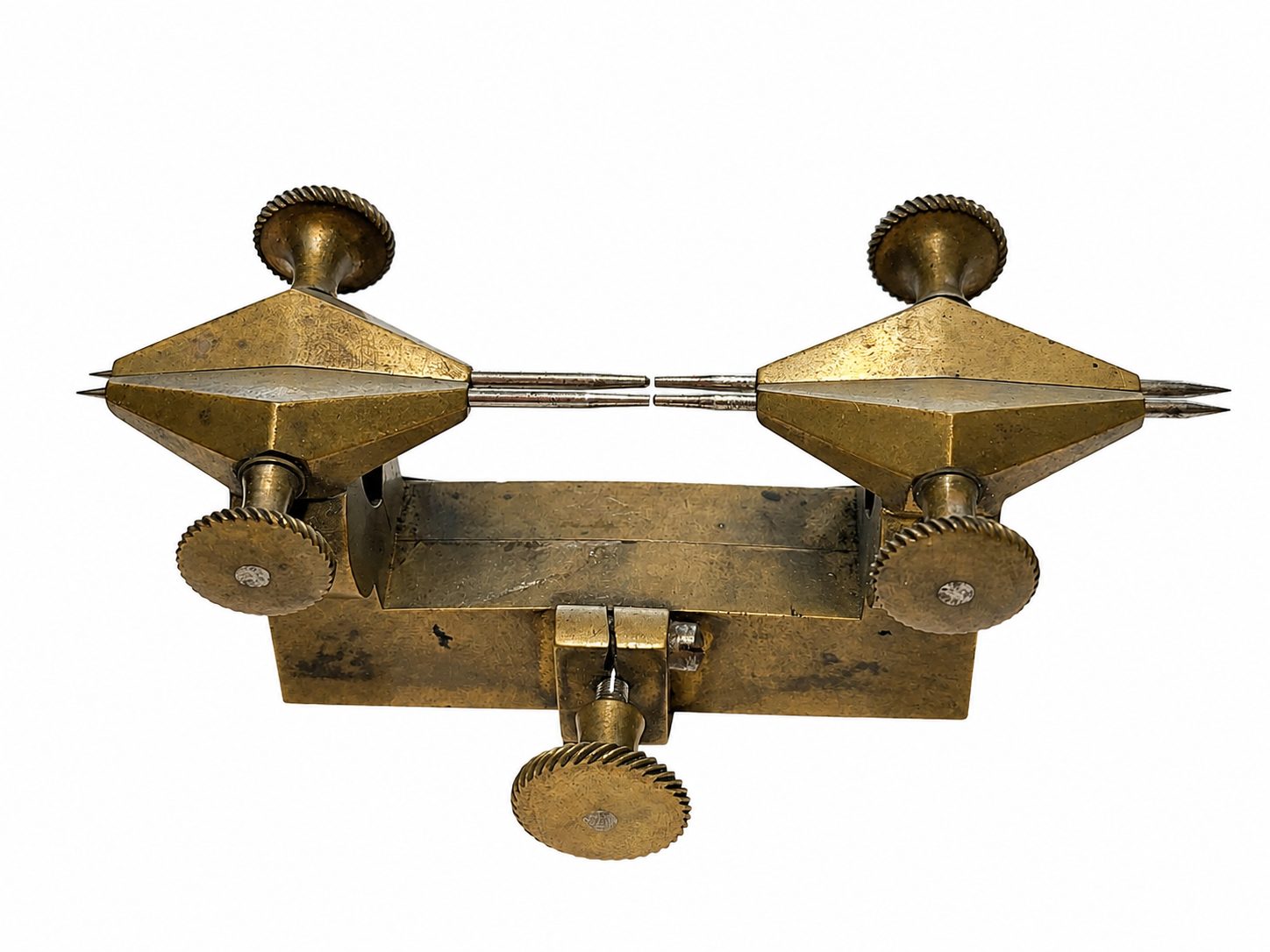
What’s This? I was out of ideas for newsletter pictures, then it hit me. I ran out to my toolbox and photographed this.
Have you ever needed a very specific tool and, to avoid the expense or time involved in obtaining it, used something else, perhaps something unsuitable for the job? We’ve all done it. And we’ve learned the hard way that the right tool makes the job go well.
The weight of the published literature supports that activated carbon, which is coal-derived, reagglomerated, and has a grain size large enough for bacteria to inhabit (x > 10 μm), is the right tool for subsurface remediation.
So, what is this tool? The answer is at the end of the newsletter.
Activated carbon does more than adsorb contaminants. Its pore structure and surface features make it an exceptional microbial habitat, promoting attachment and biofilm growth [2,3]. As biofilms develop on the carbon surface, microenvironments form at the carbon-biofilm interface that differ from bulk groundwater in solute concentration, pH, redox state, and enzymatic activity [6,7]. Microbial metabolism and enzymatic activity within these microenvironments lower local contaminant concentrations, creating a concentration gradient that drives desorption from the activated carbon [8]. Contaminants released in this way are biodegraded within the biofilm, progressively restoring adsorption capacity — a process known as bioregeneration [1,4]. Numerous studies have demonstrated that the combination of adsorption and bioregeneration removes contaminants from the subsurface more effectively than either process alone [4,5].
Activated carbon is therefore more than an adsorbent. By immediately reducing dissolved and vapor-phase concentrations, it lowers site risk at the time of application — and by sustaining the biofilm microenvironments that drive bioregeneration, it supports long-term biological destruction of contaminants.
Activated carbon is a contaminant sink, a controlled-release reservoir, and a long-term biological reactor[1].
High-quality, coal-based, ingestion-safe, sized to support abundant biofilm, activated carbon forms the foundation of the RPI® technology platforms. BOS 200+® enhances the biological reactor function of activated carbon through sustained fermentation, delivering reducing power to microbial communities while providing terminal electron acceptors that drive long-term anaerobic degradation of petroleum hydrocarbons. CAT 100® integrates biotic and abiotic processes to broaden treatment under a wider range of site conditions.
For 25 years, RPI has used activated carbon as the platform for the removal and degradation of petroleum hydrocarbons, chlorinated solvents, and other halogenated contaminants. The science behind these technologies is sound, and field applications across hundreds of sites continue to demonstrate the power of our integrated approach. The results speak for themselves.
|


This is a depthing tool used by clockmakers to accurately duplicate the mating of two gears, so they mesh smoothly. If the gears are a little too tight or too loose in their mesh, the time will not be kept accurately, and the watch will wear out prematurely. So, now you know. The right tool, like the right carbon, makes the job go well.
