Still Trying to Corral Contamination

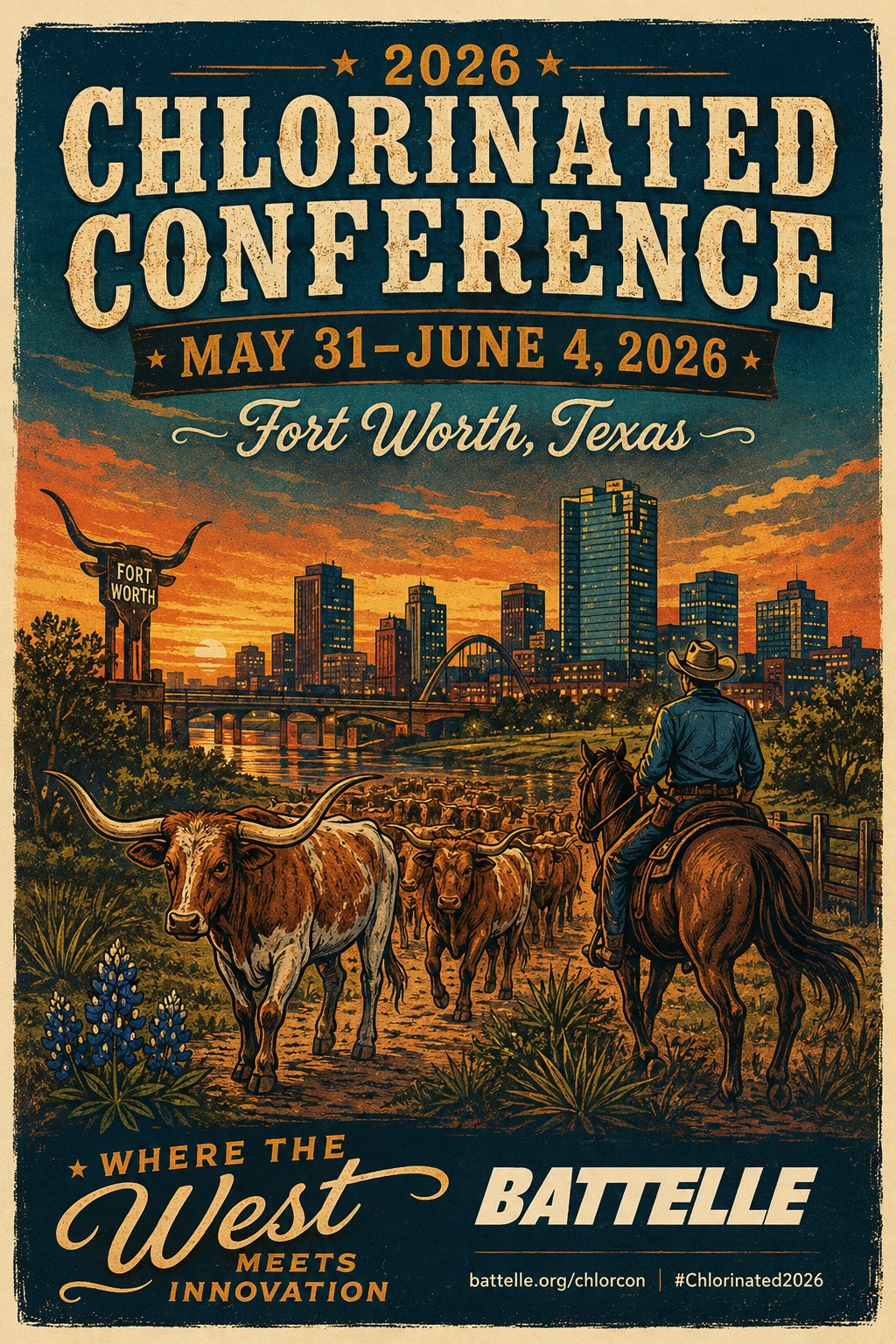
poster for the 2026 Battelle Chlorinated Conference in Fort Worth Texas with a drawing of the city, longhorns, and a man on a horse

The Battelle Chlorinated Conference is one of the largest gatherings in environmental remediation, and RPI is proud to have participated since the very first conference. For 2026, our group is bringing a solid lineup of presentations. Take a look — we think they’re worth your time.

That said, if everyone receiving this newsletter attended the conference, it would be two or three times as large as the largest crowd it has ever seen. Which means most of the people doing the real day-to-day work — the pen-to-paper, muddy-boots, and client-soothing chores — will not be there.

And honestly, if that’s you, don’t feel too bad. Alongside the science and useful conversations, there will also be a fair amount of peacocking. That’s simply what happens when engineers, geologists, scientists, consultants, and vendors gather in one place with PowerPoints and coffee.

Still, conferences matter. They expose us to new ideas and, more importantly, to what happens when those ideas encounter the field. The people and companies willing to learn and adapt are the ones most likely to excel. Those who stop learning tend to fall behind the herd.

The point is this: whether you’re attending Battelle or spending that week in the office or the field, keep your eyes peeled. We still do not have this contamination thing fully corralled. The next important idea will probably be noticed by someone paying attention as they work.

Battelle Presentations for 2026

Wednesday

D6. Lessons Learned from the Injection of Activated Carbon Slurries at a Thousand Sites: A 20-Year Review (206), Wed, June 03, 8:25 AM – 8:50 AM, Track D (Room 201), Michael Mazzarese, Derek Pizarro, Nathan Thacker.

D7. Evaluating Biological and Abiotic Degradation of Chlorinated Ethenes following In Situ Application of Iron Impregnated Activated Carbon Supporting Microbial Consortia, Wed, June 03, 10:05 AM – 10:30 AM, Track D (Room 201), Edward Winner, Scott Noland.

E6. Complex Karst Geology Treatment of LNAPL Releasing from Seeps to a Creek and Residential Properties (219), Wed, June 03, 12:35 PM – 1:00 PM, Track E (Room 202 A/B), Bill Brab.

G7. Sequestration, Reductive Dechlorination, and Biodegradation of a Mixture of Chlorinated Ethenes, PFAS, and 1,4-Dioxane in Fractured Bedrock of the Passaic Formation (840), Wed, June 03, 1:50 PM – 2:15 PM, Track G (Room 203), Raymond Vaske, Logan Bocovich, Duane Guilfoil, Scott Noland.

H7. High-Density Site Characterization Provides Successful Data-Driven Remediation at a Former Chemical Plant (216), Wed, June 03, 2:15 PM – 2:40 PM, Track H (Room 204), Bill Brab.

 Thursday

G9. Modeling Residual LNAPL and Impacts to Groundwater Using a Kinetic Approach (963), Thu, June 04, 8:25 AM – 8:50 AM, Track G (Room 203), Scott Noland, Beaux Jennings.

E9. Non-aqueous Phase Heavy Lube Oil Depletion: Microbial-Mediated Remediation of Heavy Hydrocarbon LNAPL at an Industrial Site, Thu, June 04, 10:30 AM – 10:55 AM, Track E (Room 202 A/B), Edward Winner, Gary Simpson.