

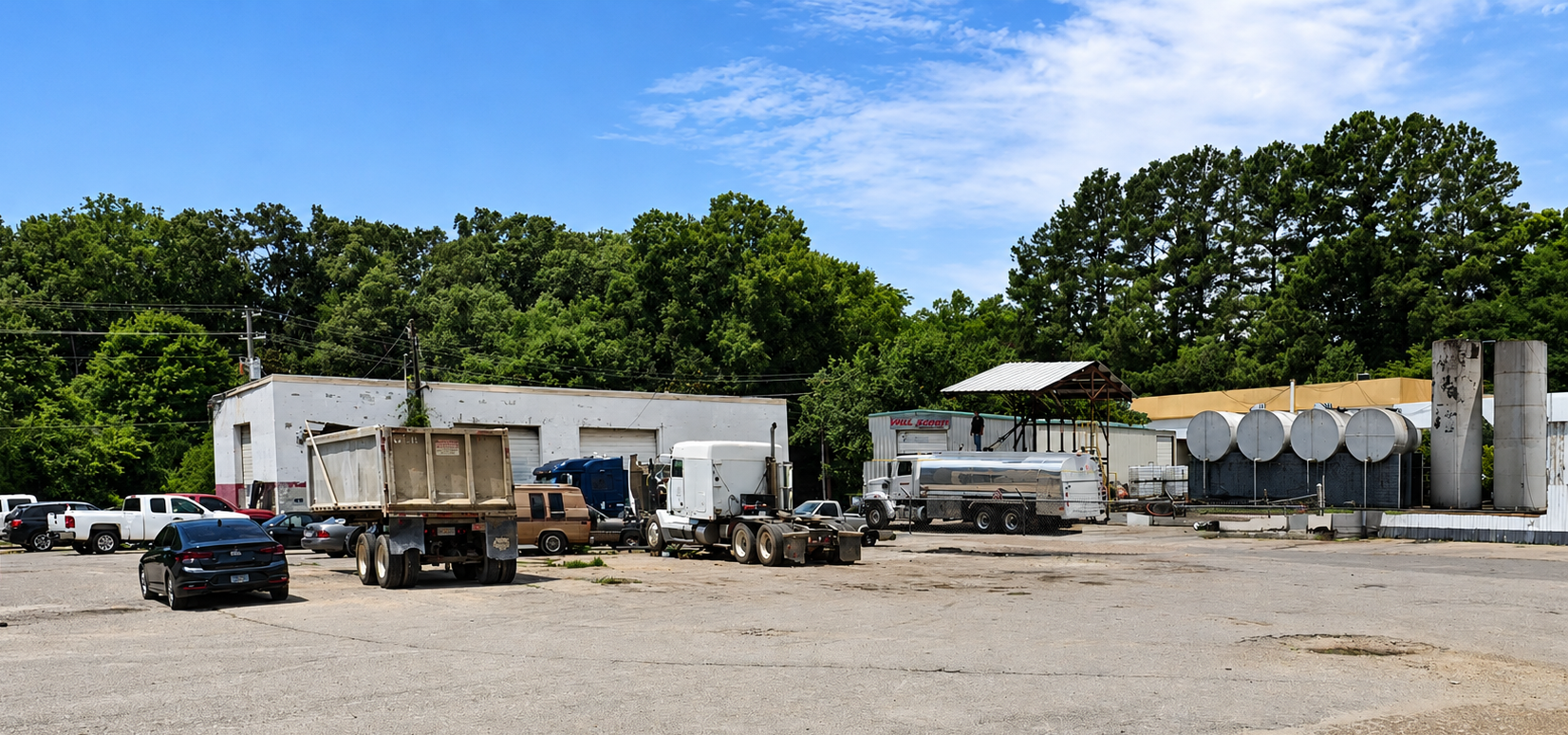
Rhea’s site presented a challenging petroleum remediation scenario characterized by recurring LNAPL and elevated dissolved-phase BTEX concentrations in a heterogeneous, predominantly sandy aquifer. Despite years of mechanical recovery, free product continued to recur in monitoring wells, and investigation failed to identify a discrete source sufficient to explain its widespread occurrence. Mechanical extraction was discontinued immediately before implementing BOS 200® in situ injection.
We evaluated treatment performance using multiple independent lines of evidence. LNAPL declined from a persistent site-wide condition to no measurable product during the final monitoring events. Twenty months after injection, UVOST® showed a site-wide 62% reduction in total fluorescence and a characteristic blue shift consistent with preferential adsorption of larger PAHs by activated carbon. Laboratory soil concentrations of BTEX and naphthalene decreased 94–99.6%, with statistically significant pre- to post-treatment differences (Mann–Whitney U, p < 0.05), while groundwater monitoring showed sustained BTEX reductions.
Geochemical changes provided additional evidence of continued biodegradation: an early nitrate pulse was rapidly utilized, sulfate remained elevated for years with evidence of sulfate reduction, and dissolved CO₂ increased with time. Together, LNAPL disappearance, UVOST reduction and blue shift, statistically significant soil reductions, declining groundwater concentrations, and sustained biological activity provide converging physical, optical, chemical, and biological evidence of remedial performance. The site received regulatory No Further Action status in August 2023, approximately four years after BOS 200® injection.

Supplying enough oxygen to meet microbial demand can be an uphill battle. An alternative is to work with the prevailing geochemistry and support anaerobic degradation (Reinhard, 1993; Seagren and Becker, 2002). This principle underpins RPI’s hydrocarbon remediation technologies, including BOS 200+®.
A new study in Environmental Microbiology provides a fascinating example. Musat et al. (2026) studied BzS1, a sulfate-reducing bacterium that degrades benzene without oxygen. When growing on benzene, a candidate three-part flavoprotein—tentatively named benzene dehydrogenase (BeDH)—makes up roughly one-fifth of the bacteria’s proteins, suggesting heavy investment in specialized machinery to attack this notably stable molecule.
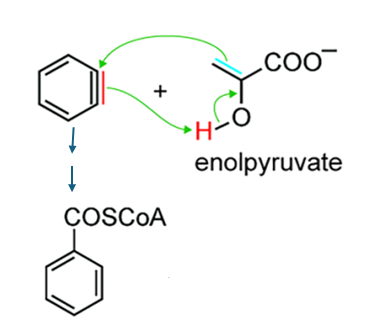
Even more interesting is how it may work. To date, three mechanisms have been proposed for anaerobic benzene activation: hydroxylation to phenol, carboxylation to benzoate, and methylation to toluene. None are proven, and BzS1 appears to use none of them. The authors’ leading hypothesis instead points to activation via a metabolite drawn from the cell’s own central carbon metabolism, feeding into the benzoyl-CoA degradation pathway—a fourth proposed mechanism. I’m betting on this one!
The broader implication is that anaerobic benzene degradation may depend on more than available electron acceptors. If BzS1 does draw on its own central carbon metabolism to activate benzene, that would link nutrient metabolism, electron transfer, and hydrocarbon destruction into a single process.
Benzene biodegradation has been demonstrated under sulfate-, iron-, and nitrate-reducing as well as methanogenic conditions (Lovley, 2000; Lee and Ulrich, 2021). BzS1 adds to that evidence—and its apparent reliance on central carbon metabolism reinforces a core design principle behind BOS 200+: an electron acceptor alone may not be enough.
BOS 200+ is built to sustain an active microbial community by supplying carbon substrates, multiple electron acceptors, and nutrients together, while activated carbon concentrates hydrocarbons and anchors the biological community to sustain hydrocarbon destruction.
BOS 200+ does not fight the aquifer—it works with it.
References: